

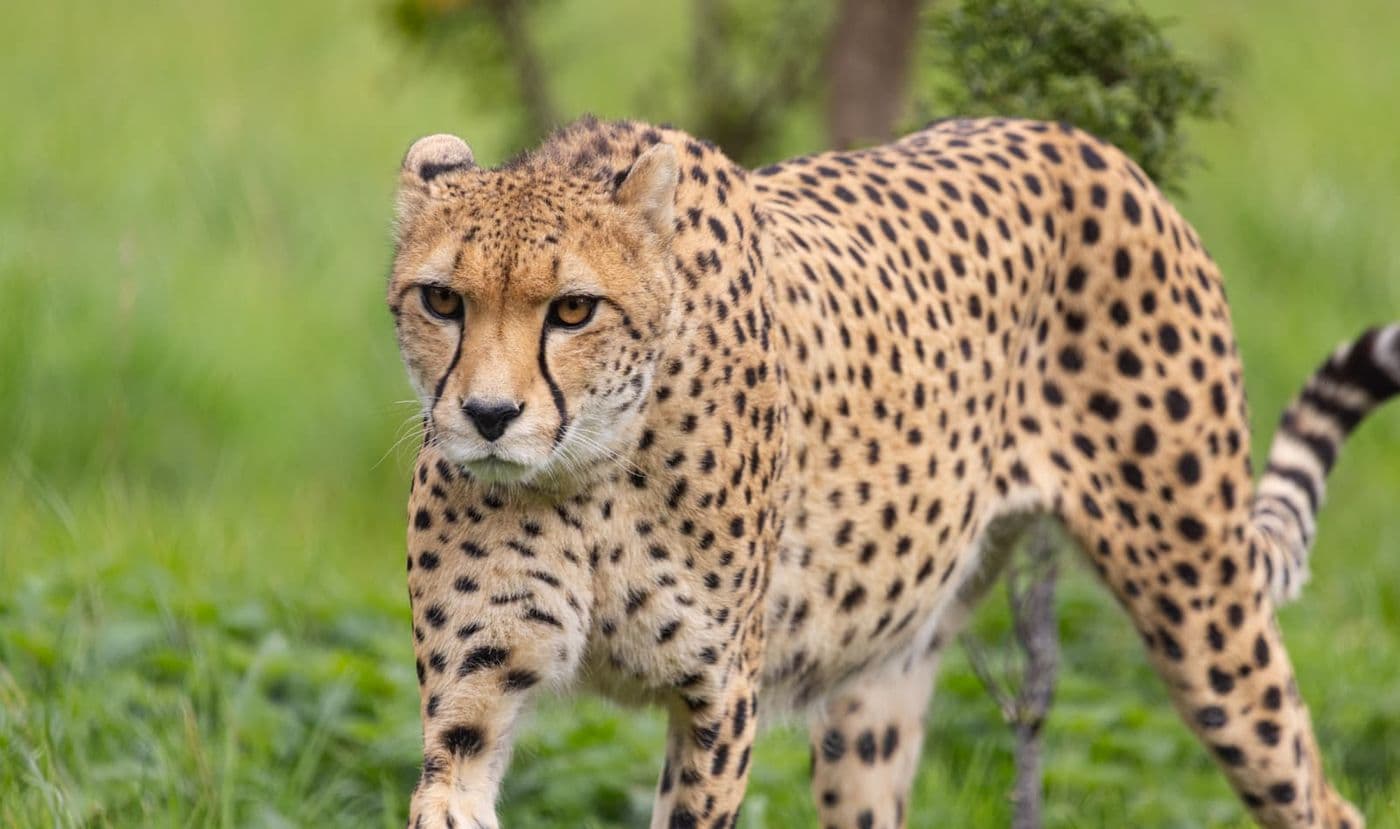
7 amazing facts about cheetahs
Posted on: 3 December, 2025
Cheetahs are some of the most extraordinary animals on the planet.
Known for their jaw-dropping speed, striking coats, and unique social behaviours, these cats are full of surprises, but behind their beauty lies a species racing against extinction.
At Bristol Zoo Project, we care for brothers, Boma and Nasir, who live within the Bénoué National Park area. Here are seven facts that highlight just how amazing cheetahs really are.
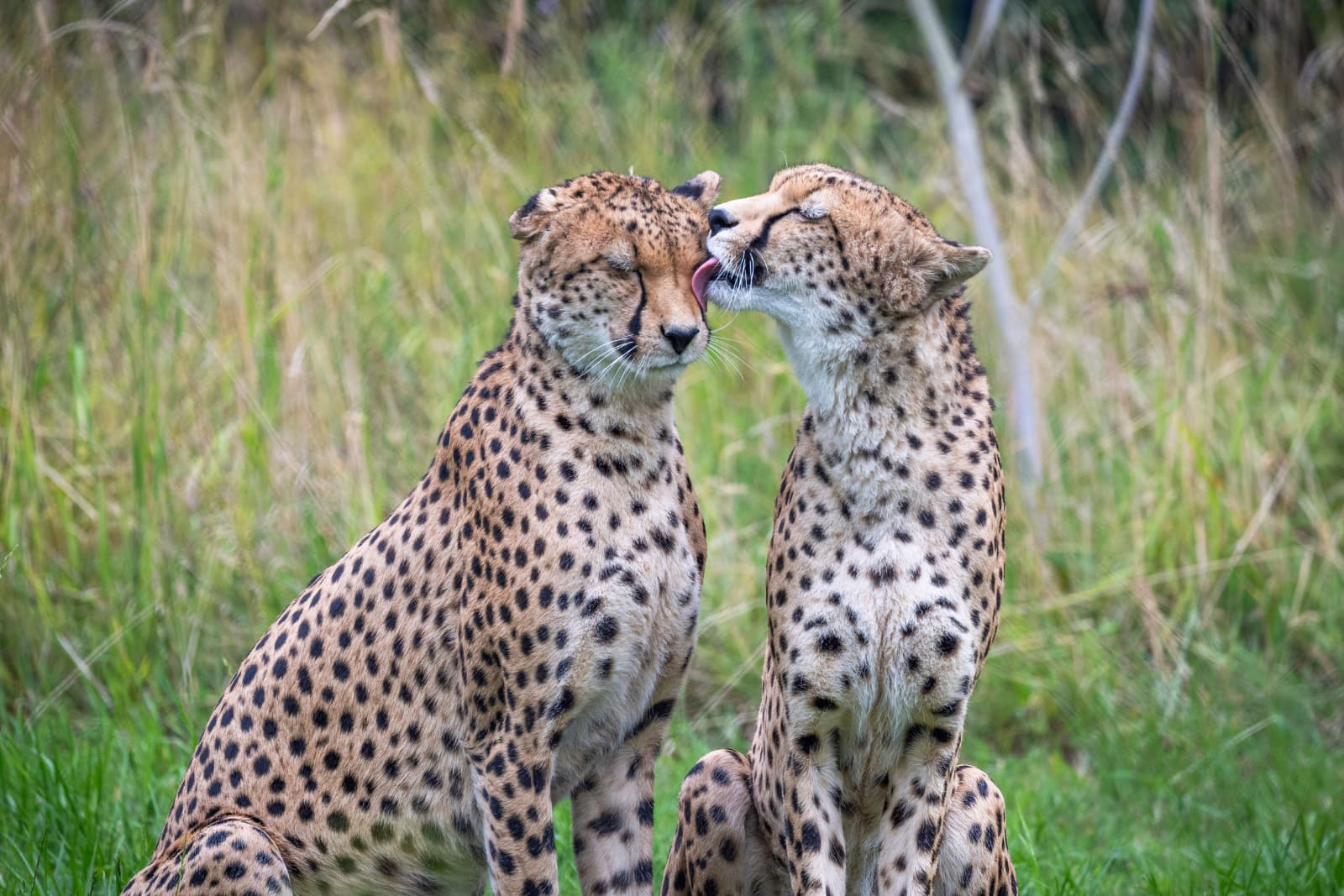 Photo credit: Doug Lodge
1. Cheetahs are Africa’s most endangered cat
Once widespread in Africa, as well as the Arabian Peninsula and east India, cheetah numbers have declined dramatically due to habitat loss, shrinking prey populations, and conflict with humans. They now only occupy 9% of their historic region. More than 90% of cheetahs have disappeared since 1900, and today it’s estimated that only 9,000-12,000 remain across Africa. There are five subspecies of cheetah, and brothers, Boma and Nasir, who live at Bristol Zoo Project, are the Endangered Northeast African subspecies of which just over 500 remain in the wild.
Cheetahs start reproducing at a young age (between one to three years old in males and between 20 and 23 months in females), can mate anytime of the year, and have the shortest gestation period of all the big cats. However, many cubs don’t survive to adulthood due to predators and lack of genetic diversity that makes them more susceptible to disease.
2. They have a unique social life
Cheetahs have a unique social life among cats, as females tend to live alone, except when raising their cubs, and males team up with their brothers or other males to form “coalitions”; small groups that stick together to defend territory and sometimes hunt together on larger prey, increasing their hunting success.
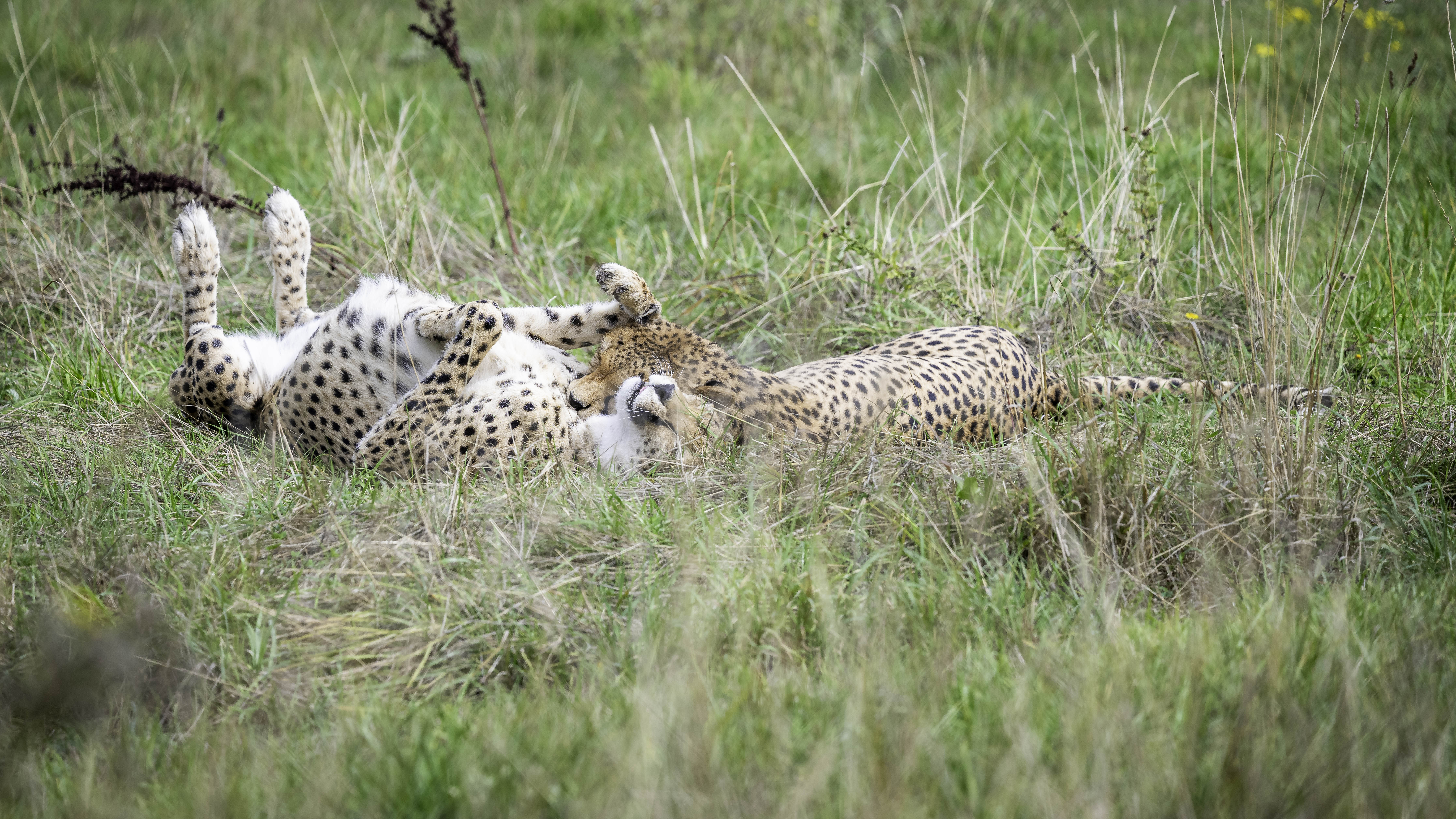 Photo credit: Doug Lodge
3. They're built for speed
The planet's fastest land animal, cheetahs are built for super speed and can accelerate from 0-60 mph in just 3 seconds. Their entire bodies are engineered for incredible bursts of speed, from a flexible spine that works like a spring, enlarged heart, lungs and nasal passages for rapid oxygen intake, semi-retractable claws for extra traction, and a long, flat tail that acts like a rudder, helping them to steer sharply at high speed. At full speed, cheetahs usually take three strides a second, covering seven meters per stride, which makes their chases very energy-intensive.
Yet despite their speed, a cheetah sprint usually lasts less than a minute, covering only 200-300 metres.
4. Their spots are like fingerprints
A cheetah’s spots are as unique as human fingerprints, with no two cheetahs sharing the same pattern. This individual patterning gives them camouflage out in the wild, but it also means researchers can identify and track specific animals. Cheetah can have between 2,000 and 3,000 spots to help them blend into their surroundings when hunting or hiding from predators. The name cheetah comes from a Hindi word, chita, meaning ‘spotted one’, but not every cheetah has spots. The rare “king cheetah” is a variation of cheetah with blotchy patterns and three bold stripes, which is caused by a hidden gene that makes them produce more black pigmentation and a thicker coat.
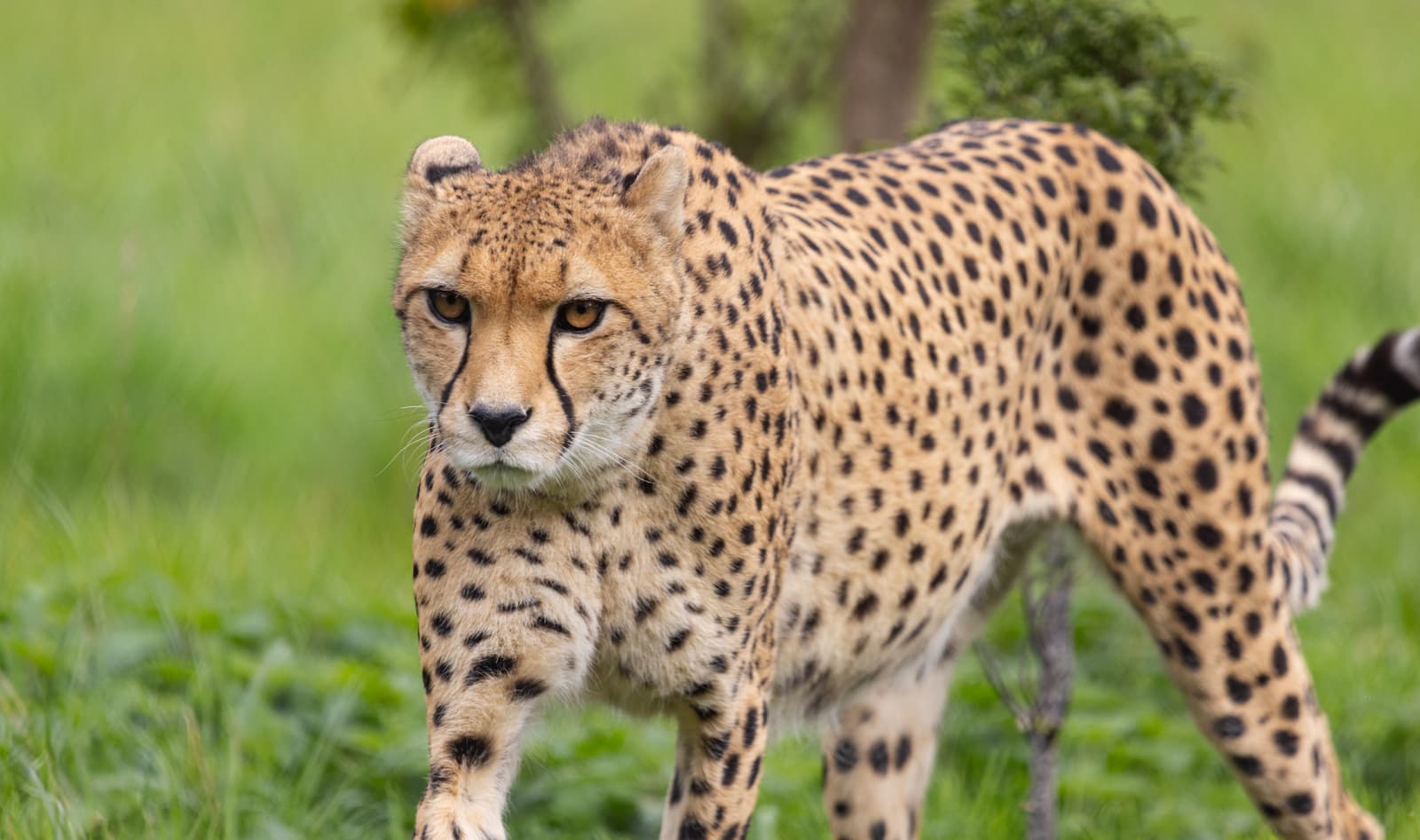 Photo credit: George Cuevas
5. Roaring isn’t in their repertoire
A cheetah's vocalisation is a lot more tranquil than other cats, and instead of delivering a ferocious roar, cheetahs meow, purr, hiss, growl, and even chirp, a sound often only heard during mating season.
Lions, tigers, jaguars and leopards all have a ligament in their voice box that stretches to create a larger sound-producing passage and a wider range of pitch. Much like house cats, cheetahs don’t have this and therefore lack the ability to make the ground shake with a deep rumbling roar, but they can purr continuously.
6. They have built-in sun protection
Cheetahs are diurnal, which means they hunt during the day. They have distinctive “tear lines”, also known as malar stripes, running from their eyes down to their mouths. These dark lines aren’t just for show; they help reduce glare from the sun so cheetahs can focus on prey in bright daylight.
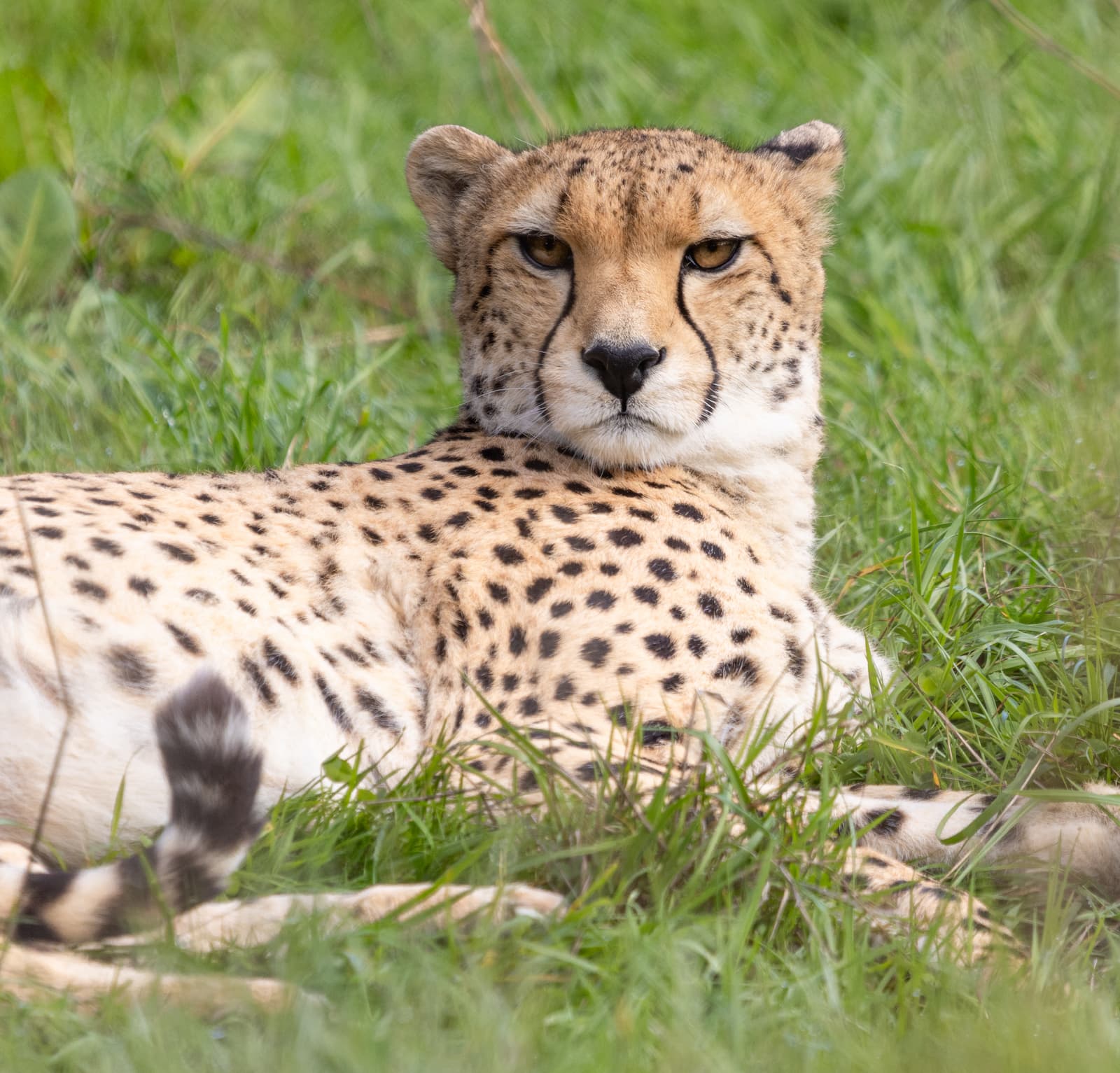 Photo credit: George Cuevas
7. Cheetahs were considered sacred, but are now slowly disappearing
Cheetahs have lived alongside humans for thousands of years. Records show that the Sumerians were training cheetahs for hunting as far back as 3,000 BC, and the tradition continued across cultures. In India, Emperor Akbar, who ruled from 1556 to 1605, is said to have kept around 1,000 trained cheetahs for royal hunts.
Their presence in ancient Egypt is also well documented. Cheetah artefacts found in King Tutankhamun’s tomb (c. 1400 BC) suggest that the animals held sacred status and were strongly rooted in Egyptian culture and symbolism.
Cheetahs are truly remarkable; speedy, social in a unique way, and crucial to the ecosystems they inhabit, but they’re also vulnerable, facing many threats in the wild and approaching extinction at an alarming rate.
Our work in Tanzania, where the cheetah population is estimated to be around 1,180, which is just over 10% of the global population, aims to restore habitats for endangered species and monitor wildlife so we can learn how best to protect it.
 Photo credit: Doug Lodge
Through our conservation and education charity, Bristol Zoological Society, we run Bristol Zoo Project, which is located off Junction 17 of the M5. Every visit supports our mission to protect nature now and into the future here in the UK and around the world.
Book your tickets today to come and see Boma and Nasir!