

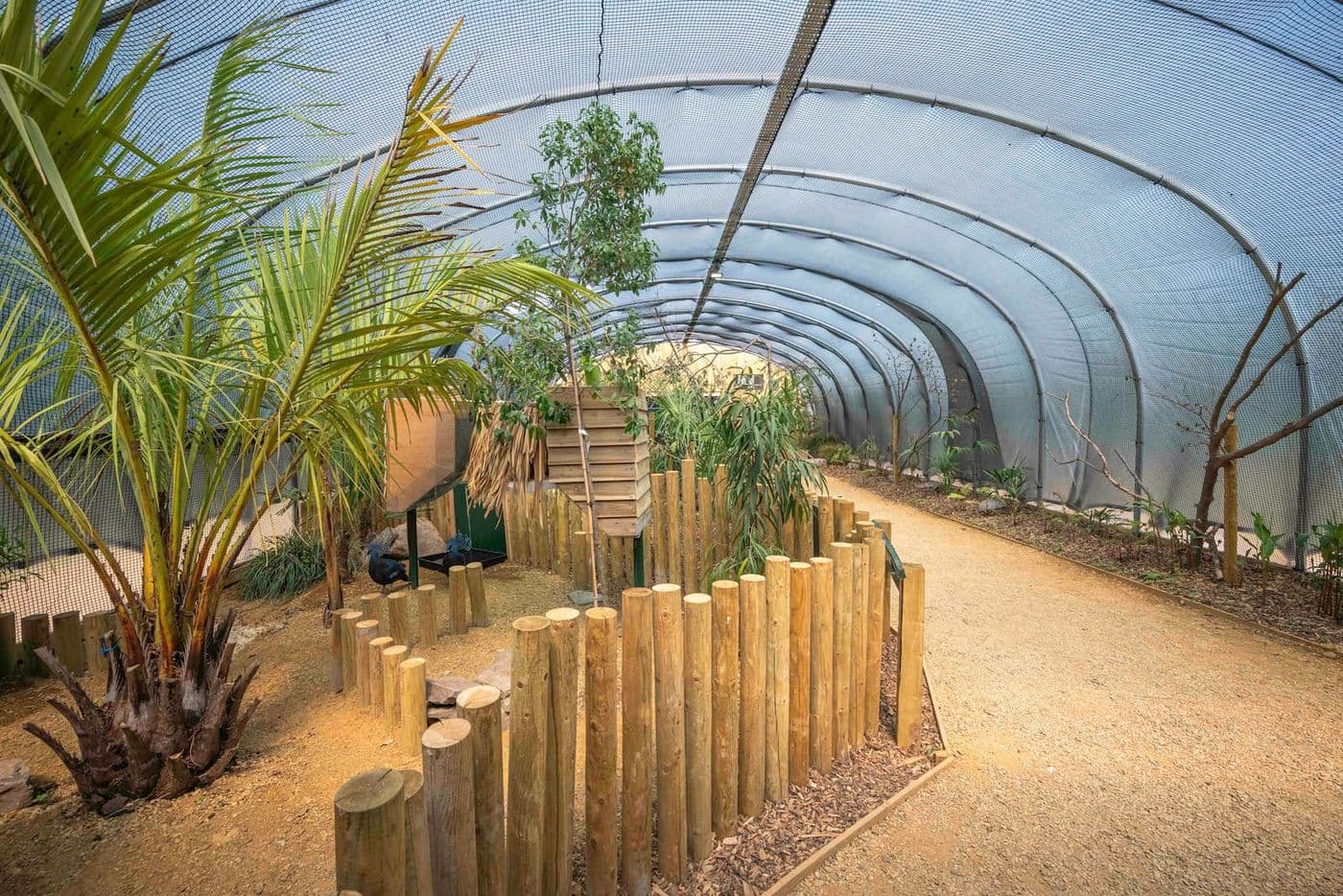
Meet the residents of the Tropical House
Posted on: 2 December, 2025
Our brand-new Tropical House is home to 13 forest-dwelling species, from beautiful birds to tiny mouse deer! The new habitat represents the tropical forests of Tanzania, Equatorial Guinea, Madagascar and the Philippines, where we carry out conservation in the wild. Across these countries, we monitor species and protect their habitats.
Read on to learn more about our new residents’ backgrounds and amazing behaviours.
The beautiful birds
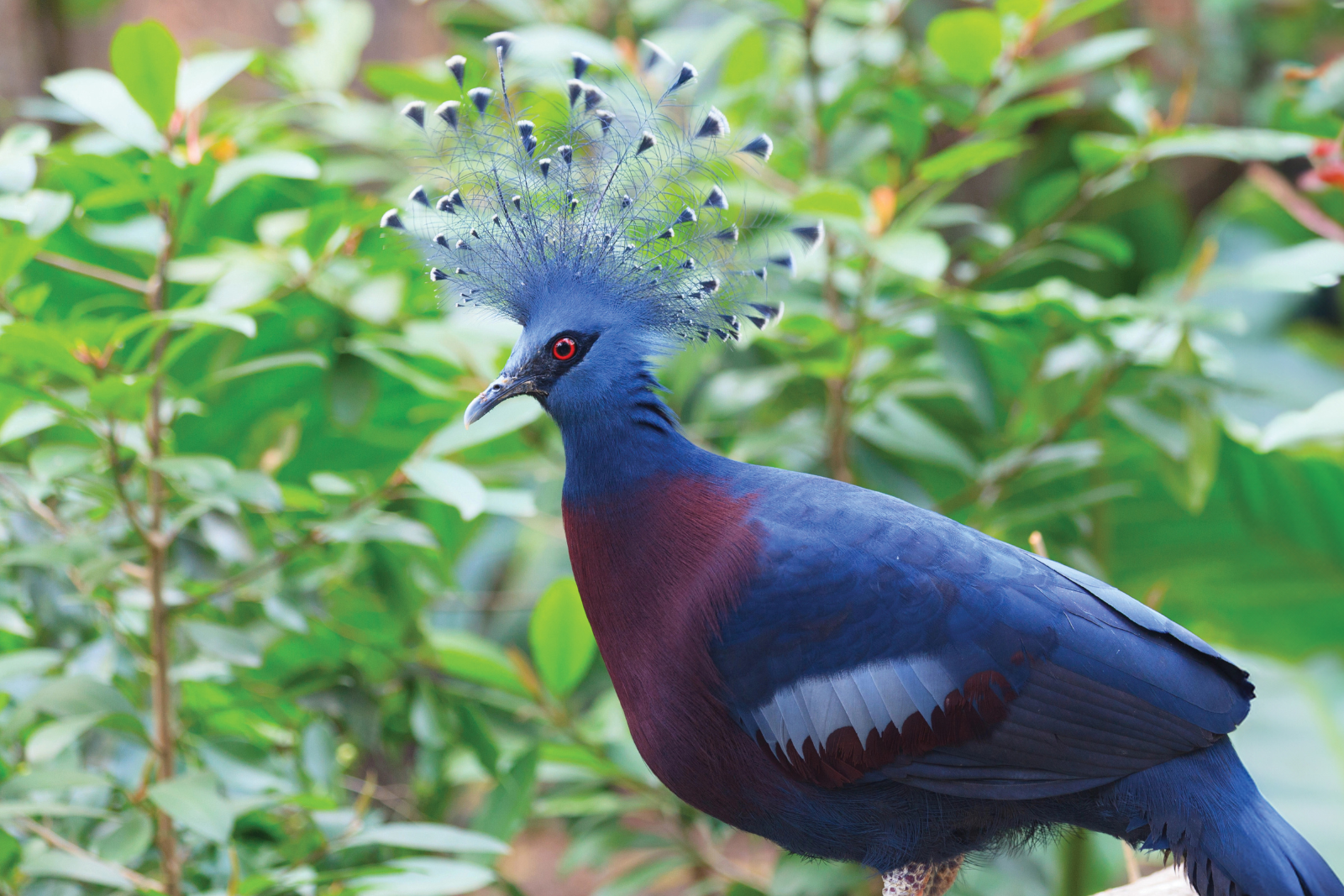
Victoria crowned pigeon
Big, blue and bright, our pair of Victoria crowned pigeons are eye-catching residents of the Tropical House. In the wild, they live in the forests of Indonesia, spending most of their time on the forest floor. The species is considered Vulnerable by the IUCN (International Union for Conservation of Nature) due to habitat loss caused by human activity. As the species is found only in Indonesia, it’s more vulnerable to habitat loss than species with bigger ranges. The two pigeons in our care are part of a regional breeding programme, helping to safeguard the future of the species in the wild.
Did you know?
The Victoria crowned pigeon is the largest of approximately 300 pigeon species in the world!

Palawan peacock pheasant
The male Palawan peacock pheasant has striking blue and black feathers with eye-like circular markings on his tail. Like many bird species, only males are brightly coloured, while the female has subtle colouring. The male’s vivid feathers are to show potential mates that he’s healthy and has good genes for breeding. When courting, the male offers the female small pieces of food he’s collected, to show that he can find food and provide for her and their young. If courting is successful, the birds will mate for life.
Our pair of pheasants are part of a regional breeding programme, helping to boost the population of this threatened species.
In the wild, this species lives only on Palawan Island in the Philippines. It’s classed as Vulnerable, as it’s threatened by hunting for food and capture for the pet trade, as well as habitat loss from human activities.
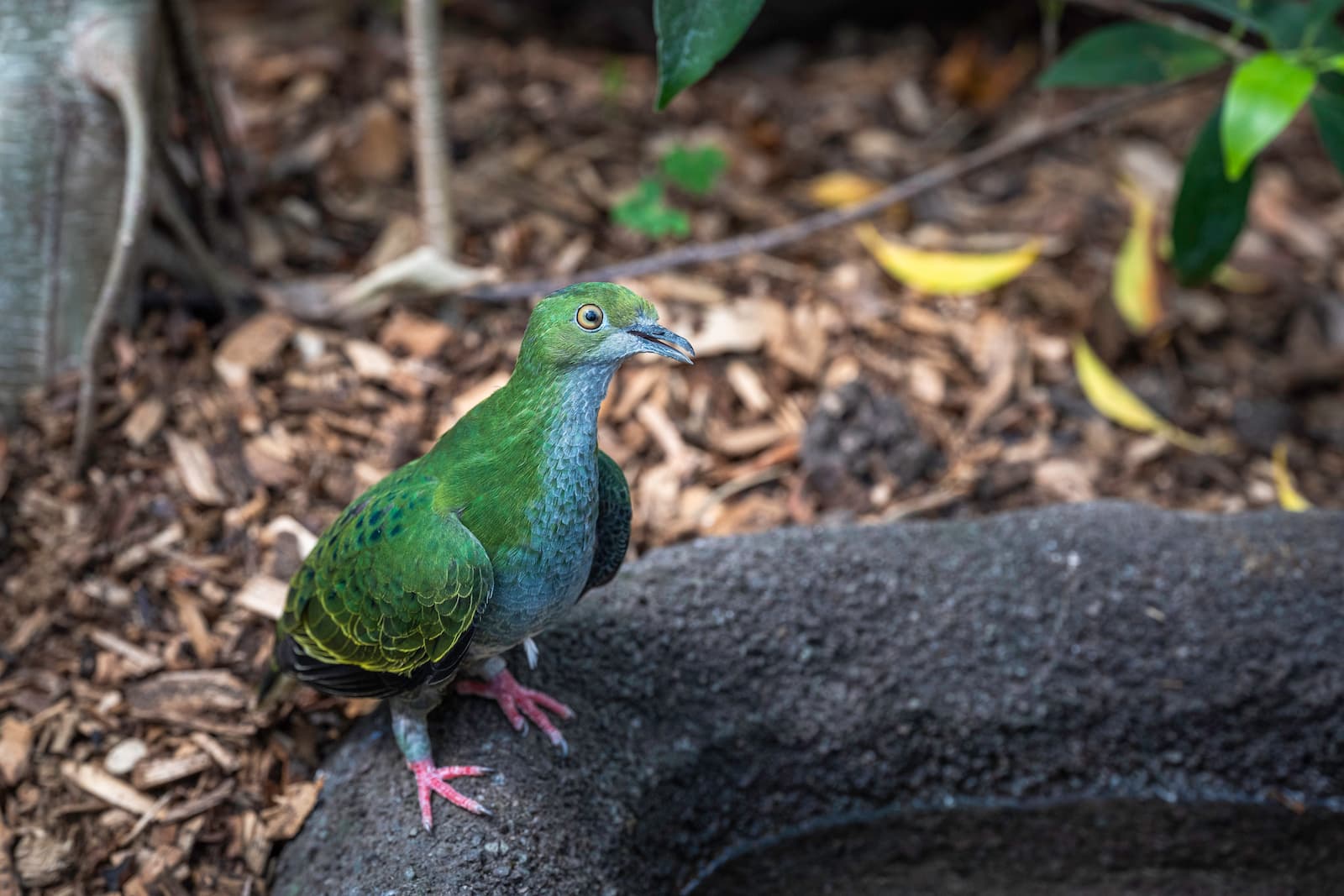
Eastern superb fruit dove
The superb fruit dove lives up to its name! They're gorgeously colourful birds, slightly smaller than a feral pigeon – the kind we’re familiar with from our towns and cities. In the wild, the species is resident across eastern Australia, Indonesia, Papua New Guinea and the Solomon Islands. Look out for our pair of fruit doves on the highest perches of the Tropical House.
Did you know?
When superb fruit doves take flight, their wings produce a whistling sound! Listen out for it during your next visit.
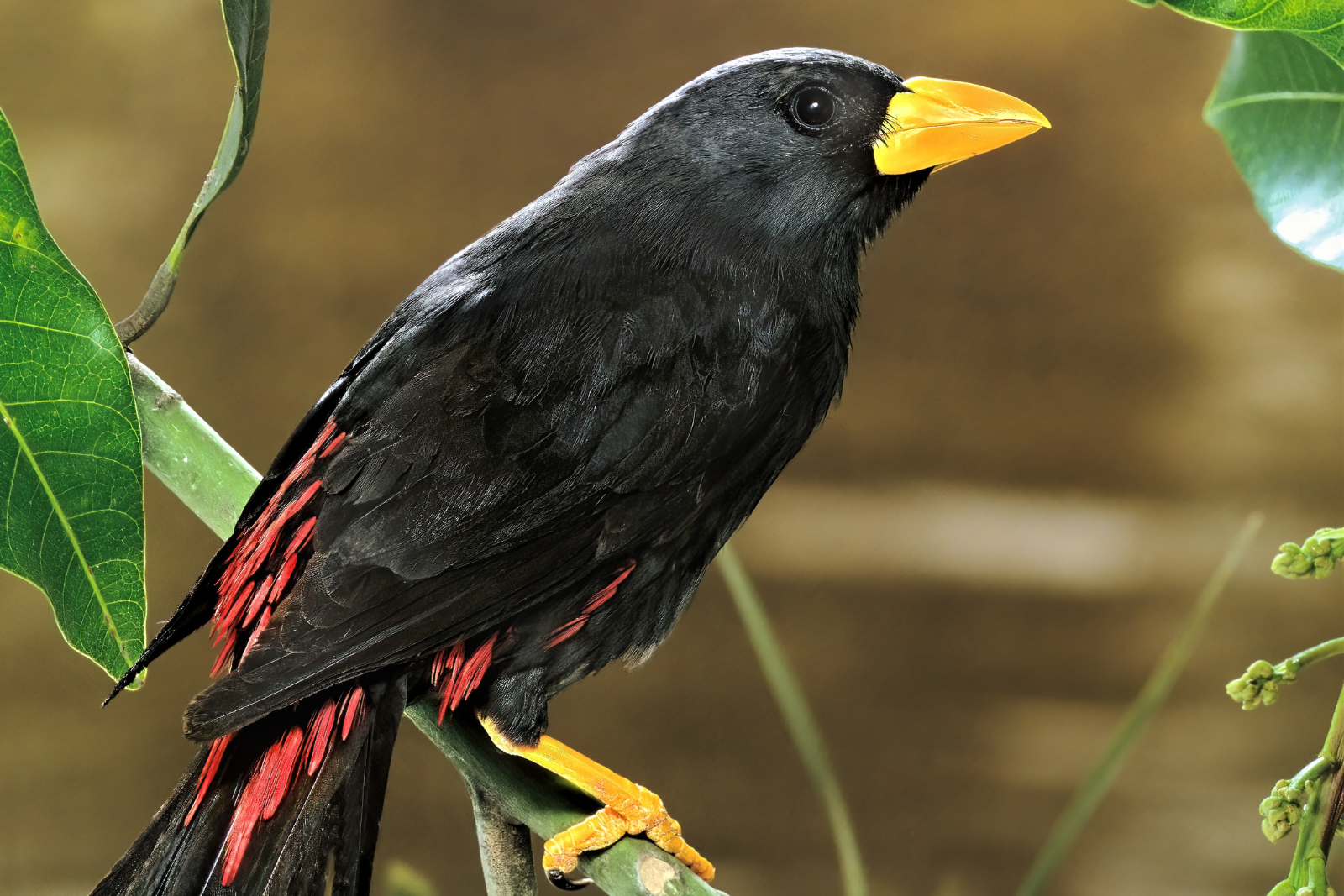
Grosbeak starling
The grosbeak starling is a glossy black bird with striking red tail feathers and a powerful yellow beak. It’s close in size to the common starling and lives across Indonesia in the wild. Like all the species in the Tropical House, they’re threatened by poaching from the wild for the exotic pet trade. Many species are captured for their bright colouring, but the grosbeak starling is targeted for its beautiful song. Our grosbeak starlings were bred at Chester Zoo. Listen out for their song next time you visit!
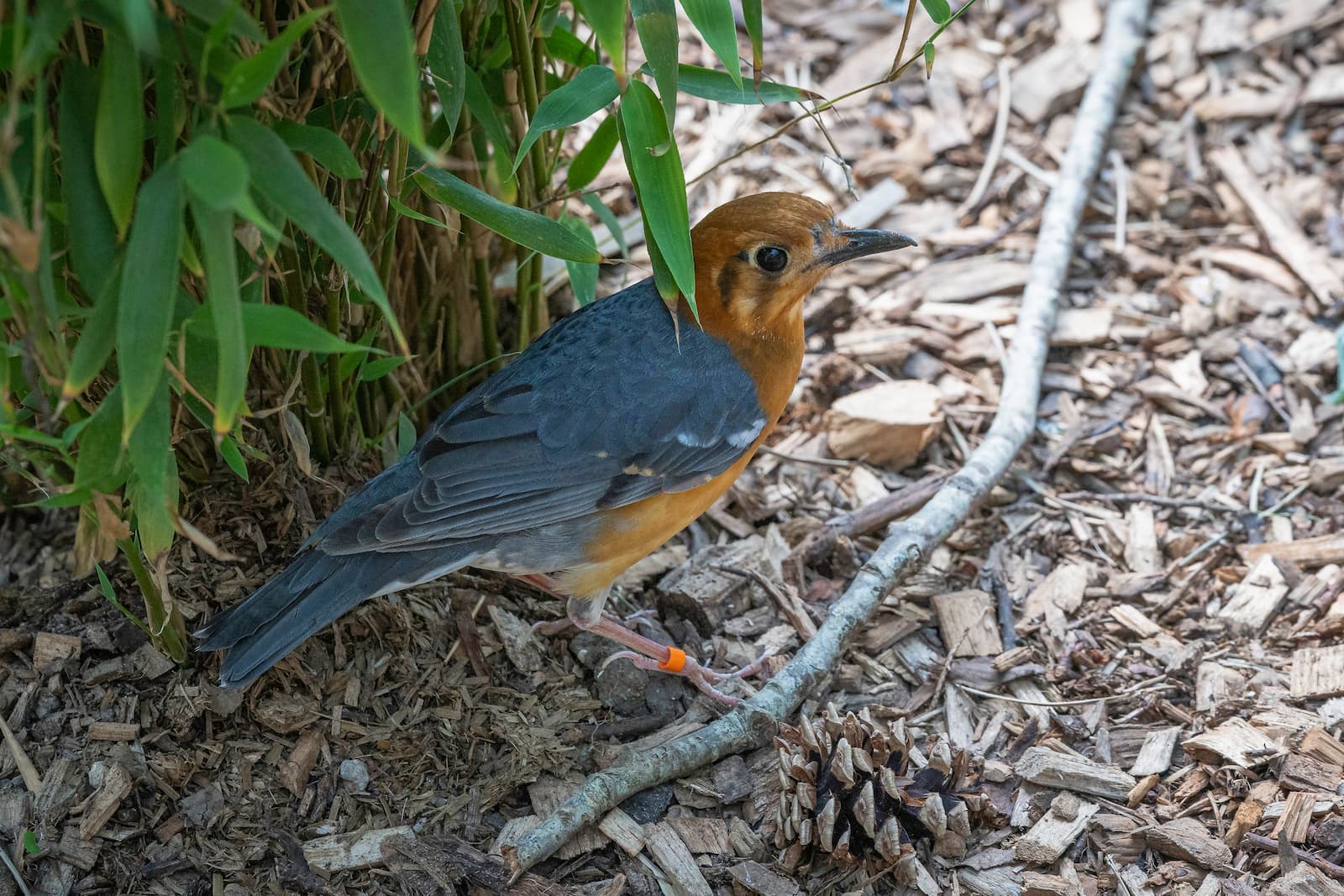
Orange-headed thrush
True to their name, both male and female orange-headed thrushes have a distinctive orange head and chest, but with a slight difference in the colour of their wings. Males are more grey, and females olive-brown. In the wild, they are found across Asia, from Bangladesh to Vietnam. They generally prefer the understory of forests, so look out for our pair on low perches when you visit!

Mindanao bleeding-heart dove
Mindanao bleeding heart doves are small, multi-coloured doves with a distinct red patch on their chests, giving them the name ‘bleeding heart’. They’re very closely related to the Negros bleeding-heart dove, one of the species we’re protecting through our conservation projects in the Philippines. We work with a local partner organisation, the Talarak Foundation, on a breed and release project for these Critically Endangered birds.
Our pair of Mindanao bleeding-heart doves are part of a breeding programme to contribute to a healthy population in zoos, to protect them from extinction in the wild.
The tiny deer
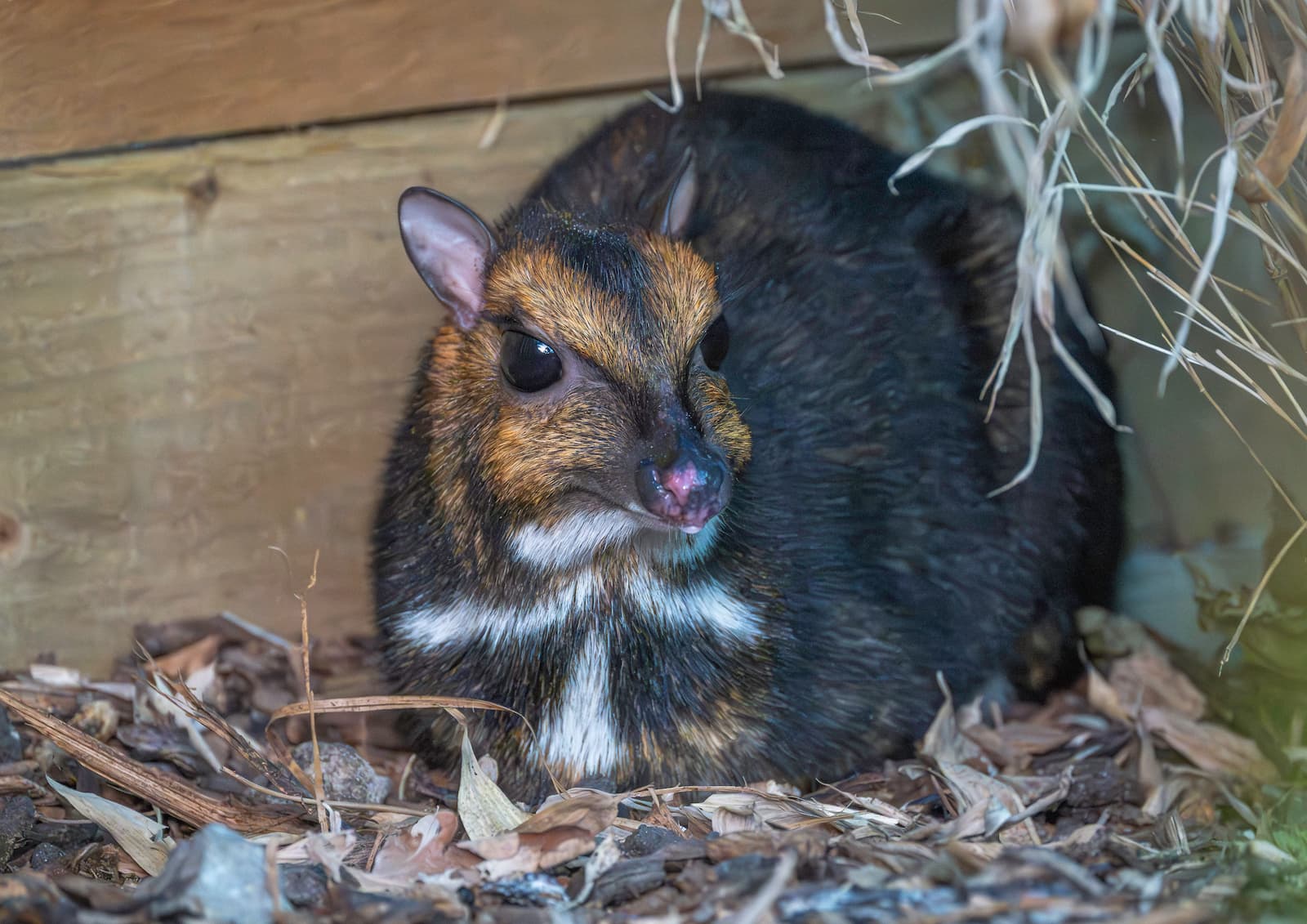
Philippine mouse deer
The Philippine mouse deer is the world’s smallest deer, at just 30cm tall! This solitary and secretive deer is thought to live only in the Philippines. They are crepuscular (most active at dusk and dawn) and spend most of their time browsing for leaves, fruit and flowers on the forest floor. They are classified as Endangered, threatened by habitat loss and poaching from the wild for the exotic pet trade. Our female deer is named Sana, which means ‘hope’ in the Filipino language Tagalog. Look out for Sana among the low leaves and branches during your next visit!
The big bold bugs
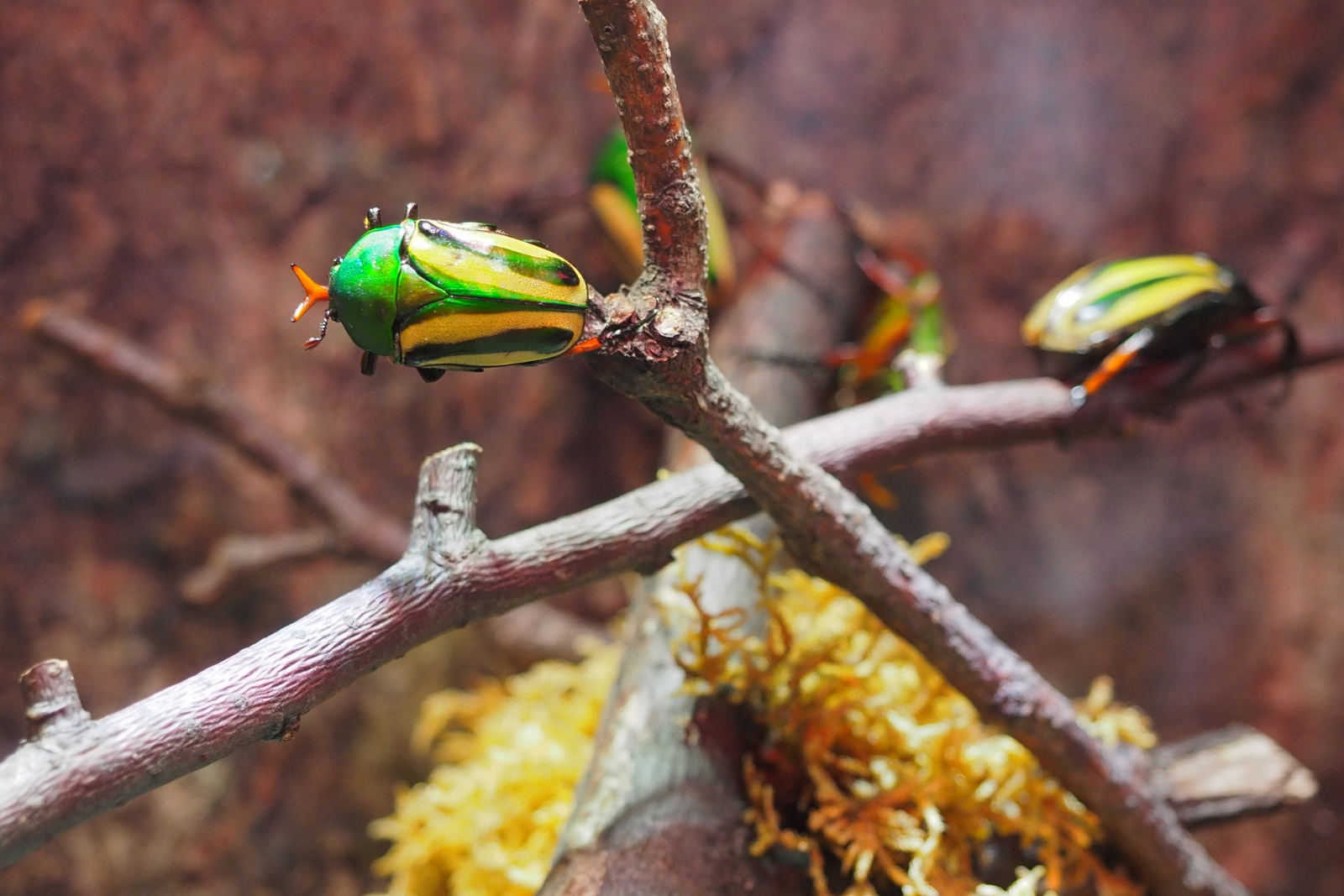
Don’t miss the bright and colourful species of African beetle! They are: the giant African flower beetle, the African fruit beetle, the sun beetle and the flamboyant flower beetle. In the wild, their striking colours help them to keep camouflaged among the plants and flowers. Beetles form a vital part of forest food chains, as they’re an important food source for many birds.
The fascinating reptiles
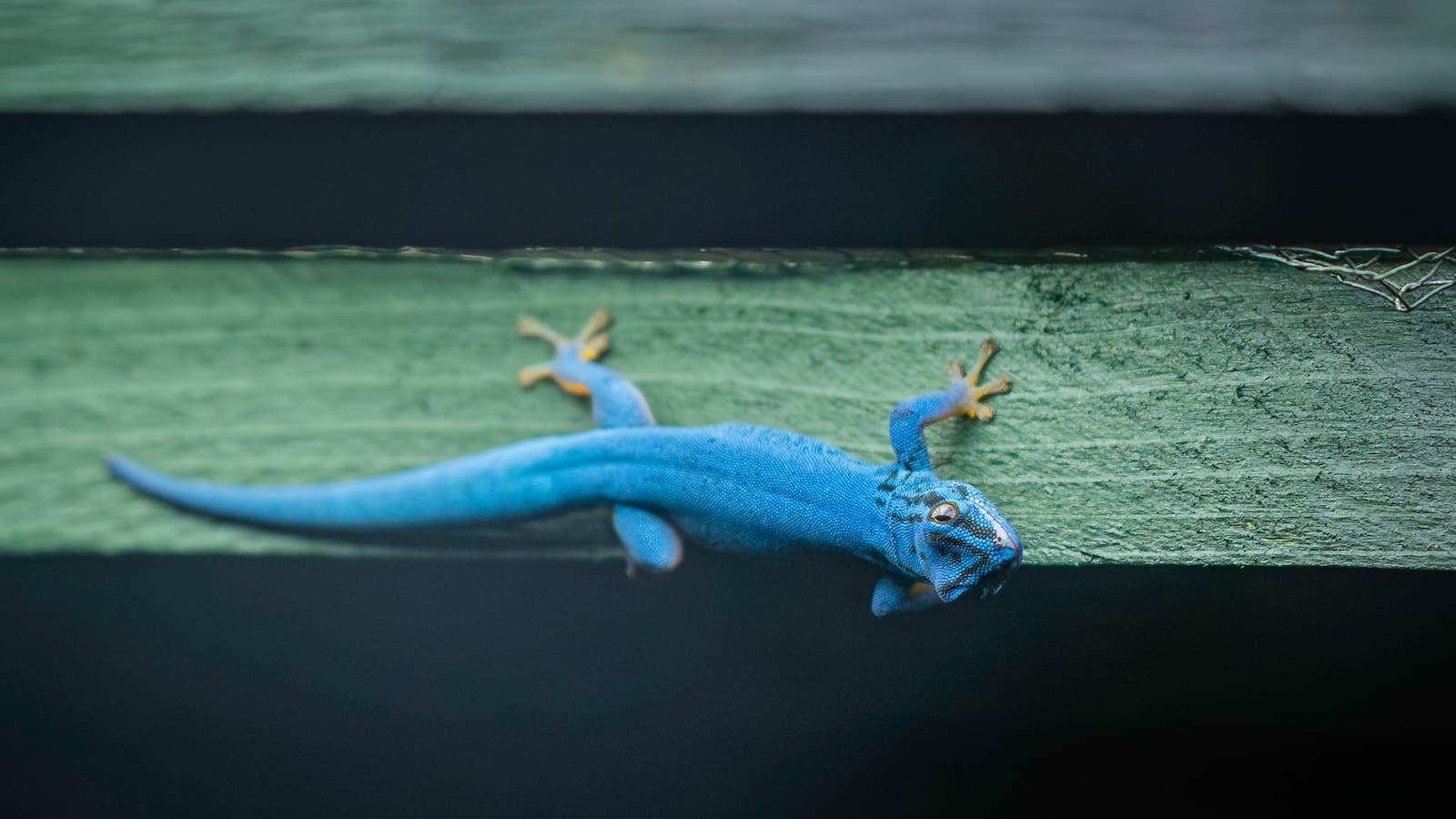
Turquoise dwarf gecko
The turquoise dwarf gecko is a small, electric blue gecko found only in a tiny area of forest in Tanzania. Its entire range is less than 8km2 and it lives on a single species of tree, the screw pine. Turquoise dwarf geckos are classed as Critically Endangered, but we’re working hard to give them hope. One of our conservation programmes focuses on protecting and restoring the area in Tanzania where the geckos are found, alongside other Critically Endangered species including the Sanje mangabey.
Read more about our conservation work in Tanzania here.
Henkel’s leaf-tailed gecko
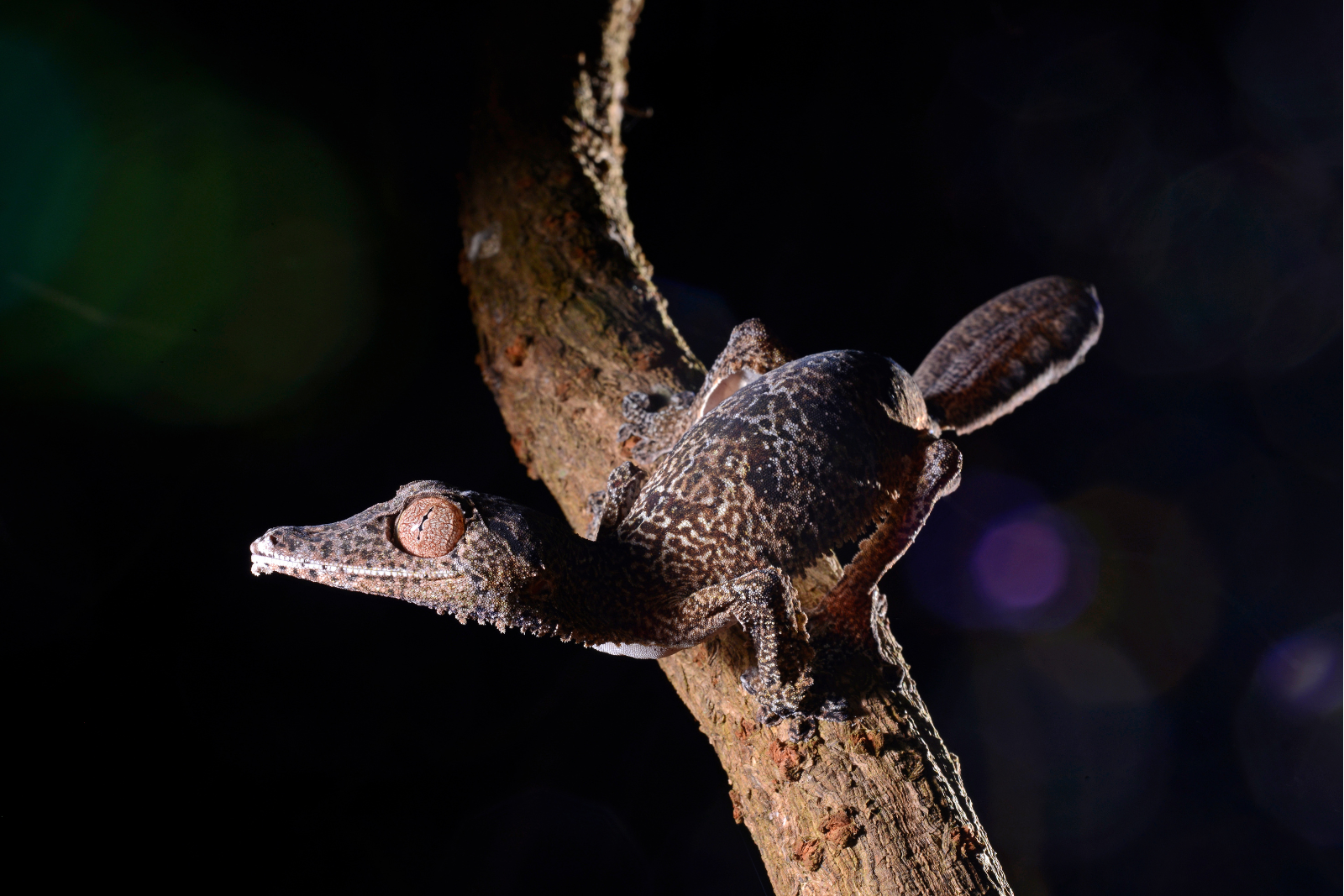
Henkel’s leaf-tailed geckos are subtly coloured geckos that have fantastic camouflage among the forests where they live. They’re bigger than the turquoise dwarf, growing up to 28cm. They use special grippy hairs on their toes to rest on vertical surfaces. You can often spot them resting on the glass front of their tank!
They’re classed as Vulnerable and found only in the forests of northwest Madagascar. One of our conservation programmes is based in northwest Madagascar, where we have successfully established over 30,000 native trees in the last two years to help restore fragmented forests.
Read more about the project here.
The terrific tortoise
Radiated tortoise
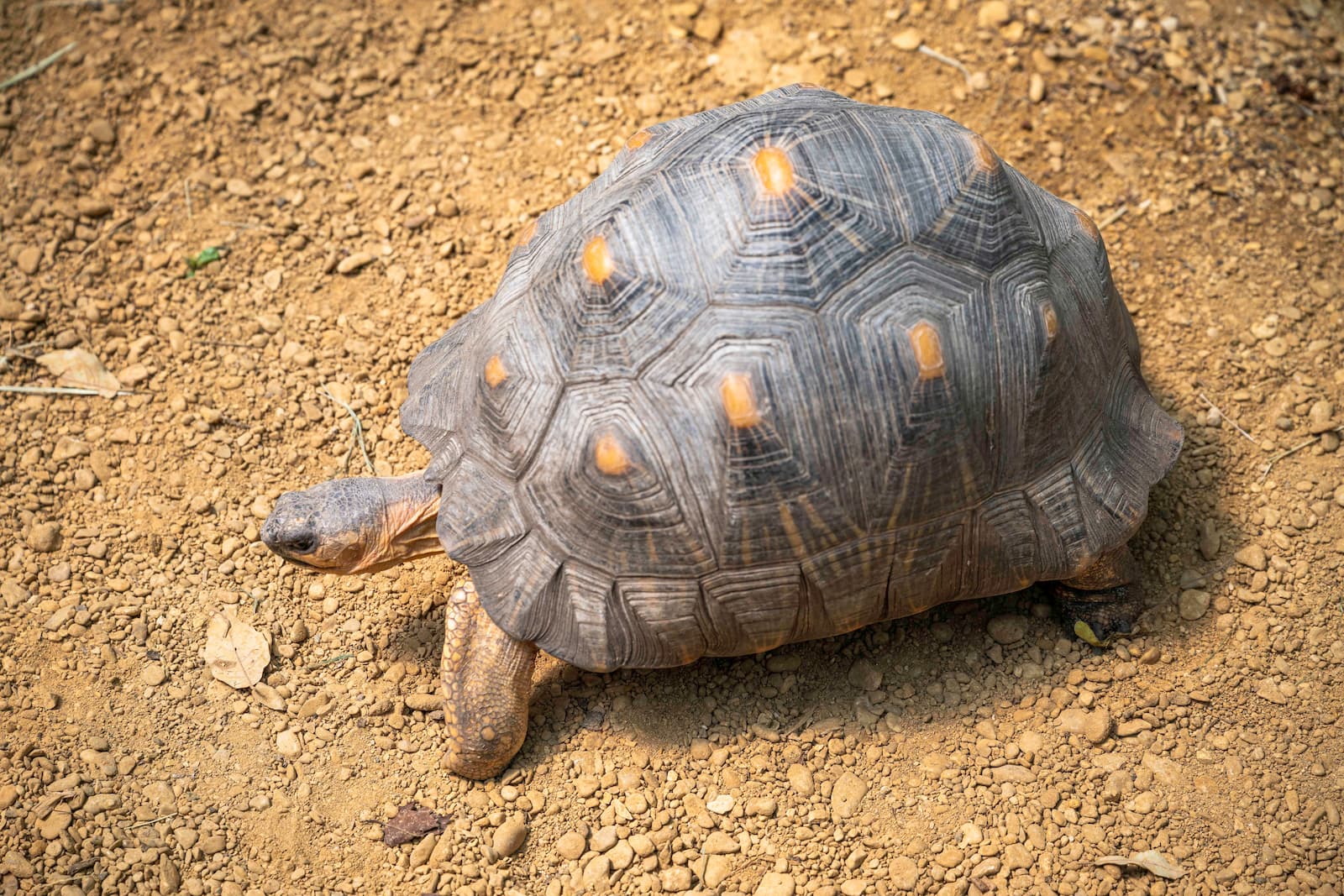
Radiated tortoises live only in southern Madagascar and are classed as Critically Endangered. They’re threatened by habitat loss, disease from introduced species and the pet trade. Our pair of radiated tortoises are part of a breeding programme to help protect the species. Look out for them basking under their special heat lamps!